Why Claim Categories Matter for Galveston Boaters
A boat can be damaged in several ways during an ordinary outing around Galveston: it may strike a dock while maneuvering, suffer damage from a fire at its berth, or be affected by severe weather while stored. The type of event often determines which part of a policy is considered, but the label alone does not guarantee payment. Coverage definitions, exclusions, deductibles, navigation limits, and the facts of the loss all matter. Understanding the difference between collision and comprehensive coverage can help Galveston boat owners ask better questions before a claim and gather the right information afterward.
What Collision and Comprehensive Usually Mean
Collision coverage generally applies to sudden physical damage when a covered boat hits another vessel or object, or when another object hits it. Comprehensive coverage, sometimes described as coverage for causes other than collision, may address specified or otherwise covered events such as theft, fire, vandalism, or certain weather losses. These are general descriptions, not universal promises: policies define covered property and events differently. For example, a boat striking a piling at a marina may be evaluated as a collision, while a fire that starts aboard the boat may fall under comprehensive coverage. Review the actual contract, including exclusions and claim conditions.
Impact Damage: Docks, Piers, and Other Boats
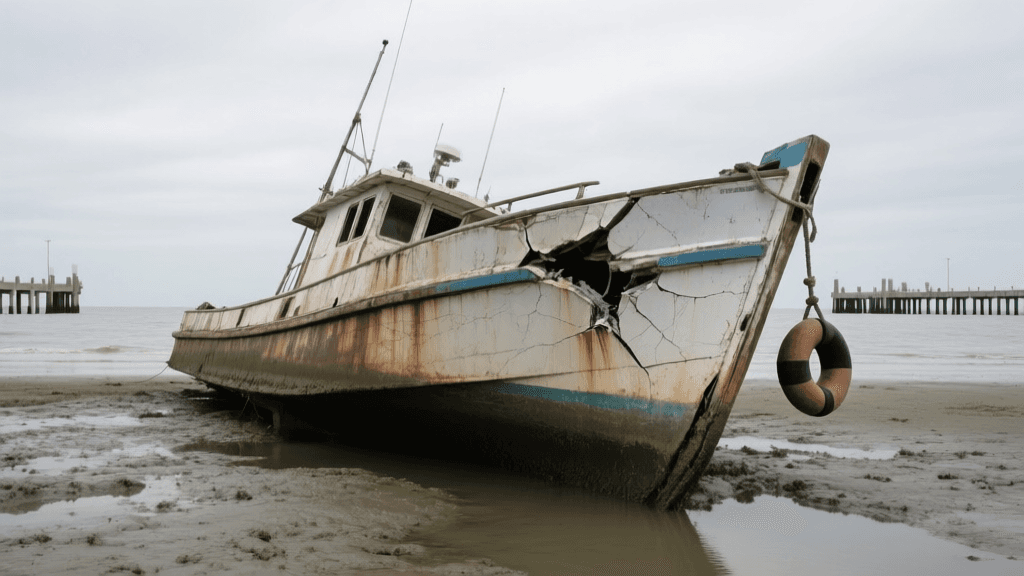
A common collision scenario is a boat scraping a dock or hitting a piling while entering a slip in a strong current or crosswind. A wake can also push a moored vessel into a neighboring boat, leaving damage to one or both hulls. Collision coverage may be relevant when sudden contact causes physical damage, subject to the policy terms and deductible. Document the location, conditions, visible damage, and other vessels involved, and exchange contact and insurance details when appropriate. Do not assume every mark is insured damage: gradual wear, deterioration, or a maintenance problem may be treated differently from a sudden impact.
Theft and Fire: Losses Without a Collision
If a boat or covered equipment disappears from a secured storage area, theft may be considered under comprehensive coverage, but the policy can specify security requirements, covered property, reporting duties, and exclusions. Report suspected theft promptly to law enforcement and the insurer, and keep purchase records, serial numbers, photographs, and any available surveillance or marina information. Fire is another distinct example: an onboard electrical fire at a Galveston-area berth could damage the hull, engine, and personal property. Coverage depends on what property is insured and how the contract treats the cause and resulting damage. Preserve relevant receipts and avoid discarding damaged items before receiving instructions.
Weather-Related Damage Requires a Close Policy Review
Gulf Coast weather can bring heavy rain, high winds, rough water, and storm-related hazards to boats kept in Galveston. A vessel may be damaged by wind-driven debris, shifting while secured, or water entering after a covered event. Comprehensive coverage may be relevant, but policies can contain storm, named-storm, wind, storage, or protective-measure conditions that affect a claim. Some contracts may also distinguish direct physical damage from maintenance issues, such as an existing leak or deterioration. Before storm season, check where the boat may navigate or be stored, what precautions the policy expects, and whether special deductibles or deadlines apply.
How Galveston Location and Use Can Affect a Claim
Where and how a boat is used can be as important as how it was damaged. A policy may set navigation boundaries, require particular storage arrangements, or define who may operate the vessel. A trip from Galveston toward nearby waters, a stay at a marina, and trailering the boat through Texas City or League City can involve different circumstances that should match the information on the policy. Owners in La Marque, Dickinson, Hitchcock, and other nearby communities should also verify that the named storage location and regular use are accurately described. If plans change, ask how the change affects coverage before relying on assumptions.
Practical Steps After Boat Damage
After an incident, prioritize safety and prevent additional damage when it is safe and reasonable to do so. Contact emergency services for an immediate hazard, and report suspected theft or a collision to the appropriate authorities. Notify the insurer promptly using the policy’s claim instructions, then record the date, location, weather, and sequence of events while details are fresh. Take wide and close-up photographs, identify witnesses, and keep receipts for reasonable temporary repairs. Do not authorize major repairs or dispose of damaged parts until the claims representative explains what inspection or documentation is needed. Accurate, timely records can make it easier to assess what happened.
Key Takeaways for Galveston Boat Owners
- Collision generally concerns sudden contact with another boat or object, while comprehensive may address covered losses such as theft or fire; policy wording controls.
- Check deductibles, exclusions, storm conditions, navigation limits, and storage requirements before a loss occurs.
- Keep photographs, serial numbers, maintenance records, and purchase receipts where they can be accessed after an incident.
- Report claims promptly, document the scene, and follow instructions before arranging substantial repairs.

Review Coverage Before You Need to File
The most useful time to clarify a claim category is before an accident, theft, fire, or storm occurs. Read the declarations and policy wording, confirm the insured boat and equipment, and note the deductible that may apply to physical damage. Ask how the policy treats a dock impact, stolen gear, fire, water intrusion, and storm-related damage, and whether any protective actions or reporting deadlines apply. Galveston boaters who also keep or launch vessels around Kemah, San Leon, Bacliff, or Clear Lake Shores can confirm that their usual locations and activities are accurately represented. Comparing policy terms can help identify meaningful differences beyond the premium.
Compare Boat Coverage With Confidence
Review your policy details and compare available boat insurance options before your next Galveston outing.
Get a Free Quote