Why Water Sports Safety Matters in Galveston
A day of waterskiing, wakeboarding, or tubing can turn serious quickly if the operator loses sight of a rider, a towline drifts near the propeller, or another boat crosses the towing path. Galveston boaters often share busy waterways with fishing vessels, personal watercraft, and recreational traffic, while wind, chop, and changing visibility can complicate communication. A safe outing starts before the engine is started: confirm who is operating, who is spotting, what equipment is aboard, and whether everyone understands the signals. This guide covers practical precautions and insurance questions to consider before inviting guests onto Galveston Bay or nearby waters.
Galveston Conditions Can Change the Risk
Water conditions around Galveston vary with wind, tides, boat traffic, and location. Open stretches of Galveston Bay can become choppy, while channels and narrower areas require extra attention to other vessels and navigational hazards. Conditions that feel manageable near the dock may be less comfortable for a rider being towed. Check a reliable marine forecast and local advisories before departure, then reassess if visibility drops, wind rises, or traffic becomes dense. Choose a suitable area with room to turn and stop, and avoid assuming that a familiar route will be clear. A conservative decision to postpone towing is often safer than pushing ahead when conditions deteriorate.
Set Up a Safe Tow Before Leaving the Dock
Inspect the towline, handle, attachment point, and any towable for wear, fraying, cracks, or loose hardware. Use equipment designed for the activity and follow its capacity and use instructions; never attach a towline to a rail, cleat, or other point that is not intended for towing. Confirm the boat has enough room to accelerate, turn, and stop without bringing the rider close to docks, swimmers, shallow areas, or other vessels. The operator should maintain a steady, appropriate speed and avoid abrupt turns or throttle changes. Before starting, agree on clear signals for ready, faster, slower, stop, and trouble so the operator can respond promptly.
Give the Spotter a Clear Role
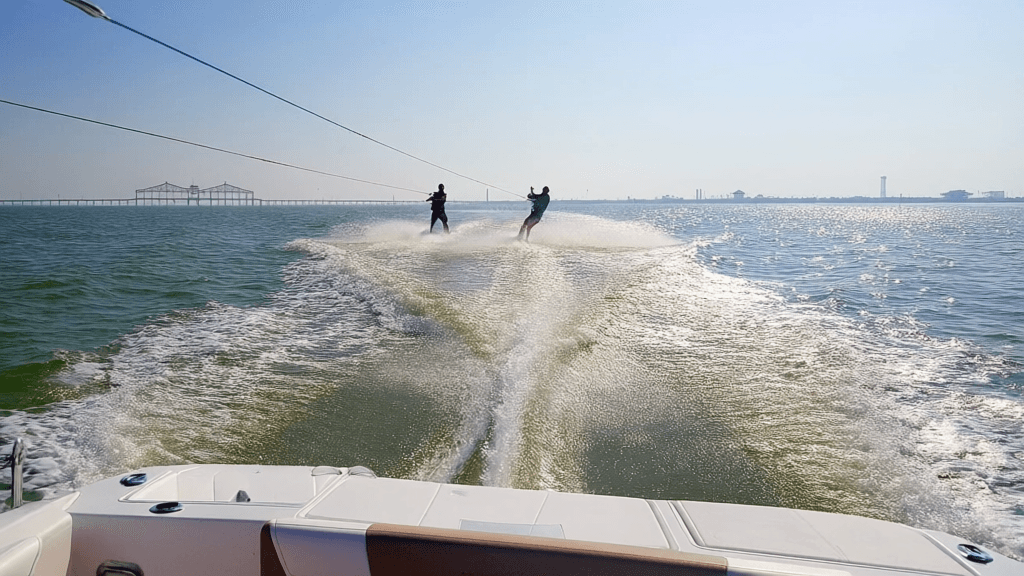
A dedicated spotter helps the operator keep track of the rider without taking attention away from navigation. Before launch, agree that the spotter will watch the rider continuously, relay hand signals and hazards, and alert the operator immediately if the rider falls or signals distress. The spotter should sit where visibility is unobstructed and avoid distractions such as phones or conversations. Establish a shared set of simple signals and confirm that everyone recognizes them; do not rely on gestures that could be confused with ordinary movement. Texas requirements can depend on the activity and equipment, so check current state rules. Regardless of the minimum legal arrangement, an attentive spotter is a valuable safety layer.
Brief Passengers and Check Safety Equipment
Before anyone gets in the water, explain how to wear a properly fitted life jacket appropriate to the activity, where throwable flotation is located, and how a rider should signal that they are ready or need help. Point out the propeller danger zone and make clear that the engine must be off before a person approaches the stern or boards from the water. Review safe reboarding procedures and assign one passenger to call for help if an emergency occurs. Inspect the boat’s required safety equipment, communication devices, and first-aid supplies before departure. For younger passengers or first-time riders, use a calm, step-by-step briefing and keep the first tow short and conservative.
Understand the Liability Exposure
A collision, a rider striking an object, or an injury during boarding may lead to medical expenses and a claim alleging negligent operation. The boat operator’s actions, the condition of equipment, passenger instructions, and the circumstances of the incident can all matter. Boat liability coverage may help with covered bodily injury or property damage claims for which an insured is legally responsible, subject to the policy’s limits, exclusions, and conditions. Coverage is not automatic for every activity or every person aboard. Review whether the policy addresses towing and water sports, who qualifies as an insured operator, and whether any activity, vessel, or passenger restrictions apply. Ask about applicable liability limits and available options rather than assuming a standard policy provides a particular level of protection.
Local Habits for Galveston and Nearby Launch Areas
Galveston-area boaters may launch from different points and travel through a mix of open bay water, channels, and busier recreational areas. Traffic patterns near popular access points can change by day, season, and weather, so choose a towing location with clear sightlines and adequate separation from swimmers, anglers, and other boats. Boaters coming from Texas City, League City, Kemah, or Clear Lake Shores should plan for the conditions along their route, not just at the destination. Check current navigation notices and local restrictions, and keep a charged communication device accessible. Local knowledge helps, but it does not replace active lookout, safe speeds, and a willingness to move or stop when conditions are unsuitable.
Key Takeaways Before the First Tow
A Practical Pre-Departure Checklist
- Choose a towing area with enough open water and check wind, visibility, and traffic before launching.
- Inspect the towline, tow point, towable, life jackets, and required safety equipment for damage or poor fit.
- Assign an attentive spotter and agree on clear signals before the rider enters the water.
- Brief every passenger on propeller hazards, reboarding, flotation equipment, and what to do in an emergency.
- Review the boat policy for towing activities, insured operators, liability limits, exclusions, and conditions.

Review Coverage and Plan Your Next Outing
Before the next water sports trip, gather the boat’s policy and note the vessel details, usual operators, planned activities, and any questions about passengers or towing equipment. Ask a qualified insurance professional to explain the liability limit, relevant exclusions, claims process, and whether optional coverage may be appropriate for your circumstances. Keep the discussion specific: tubing, wakeboarding, and waterskiing can involve different equipment and practices, and policy wording matters. Separately, make a written safety plan that names the operator and spotter, identifies signals, and sets conditions for ending the activity. Thoughtful preparation cannot eliminate every accident, but it can reduce avoidable hazards and help you make informed decisions about financial protection.
Make Your Next Galveston Boat Day a Safer One
Compare your safety plan with your policy details before inviting passengers out for water sports.
Get a Free Quote